Deviated Nasal Septum (DNS) Surgery in Thane
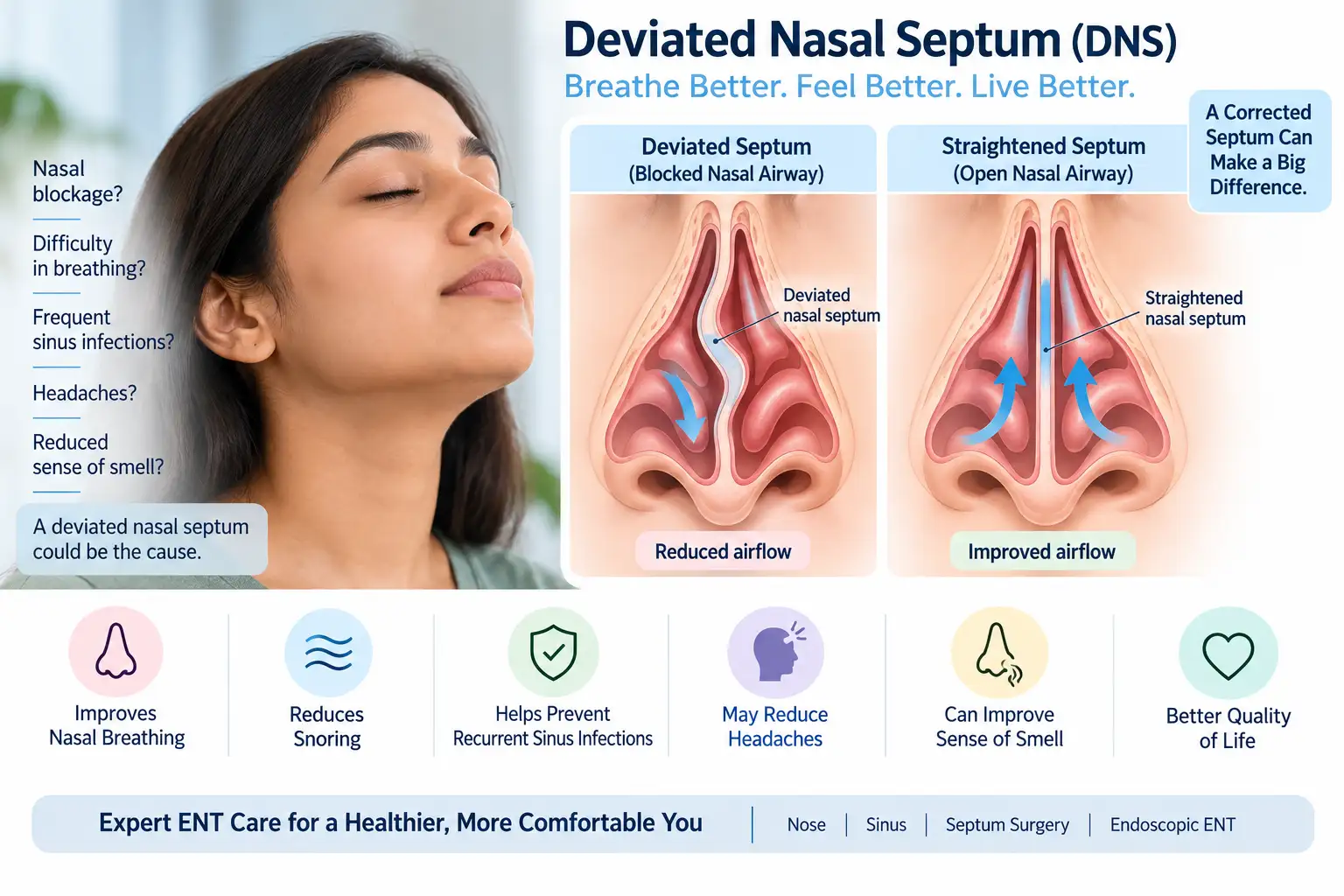
A deviated nasal septum is a common condition in which the partition between the two sides of the nose is displaced from the centre. When the deviation significantly narrows the nasal airway, it may cause persistent nasal blockage, difficulty breathing through the nose, snoring, recurrent sinus symptoms or other problems.
What is a Deviated Nasal Septum?
The nasal septum is the wall made of bone and cartilage that separates the right and left nasal passages. Ideally, it lies close to the centre. When it is bent or displaced to one side, it is called a deviated nasal septum (DNS).
A mild deviation is very common and may cause no symptoms at all. Treatment is generally considered when the deviation is associated with troublesome symptoms or contributes to functional problems.
Symptoms of a Deviated Nasal Septum
Depending on the severity and location of the deviation, a person may experience:
- Persistent or recurrent blockage of one or both sides of the nose
- Difficulty breathing comfortably through the nose
- One side of the nose feeling more blocked than the other
- Snoring or disturbed sleep
- Recurrent nasal or sinus symptoms
- Nasal dryness, crusting or occasional nosebleeds
- Head or facial discomfort in some patients
What Causes a Deviated Septum?
A deviated septum may develop during growth or may be present from birth. It can also result from an injury to the nose, including injuries that occurred many years earlier. In some people, the deviation becomes more noticeable as the nose and facial structures develop.
Does Every Deviated Septum Need Surgery?
No. Many people have a deviated septum without significant symptoms and do not require surgery. Medicines may be useful when swelling from allergy or inflammation is contributing to nasal obstruction, but medicines do not physically straighten a bent nasal septum.
If nasal obstruction remains troublesome despite appropriate medical treatment, or if the structural deviation is clearly responsible for the symptoms, an ENT specialist may discuss surgical correction.
How is a Deviated Septum Diagnosed?
Diagnosis begins with a detailed history and examination of the nose. Depending on the symptoms, an ENT specialist may perform nasal endoscopy to examine the nasal passages more closely and assess the septum, turbinates and other structures.
Further investigations may be advised when there is a specific clinical reason to look for sinus disease or another associated problem.
What is Septoplasty?
Septoplasty is the operation performed to correct a deviated nasal septum and improve the nasal airway. The aim is to carefully reshape, reposition or remove selected portions of deviated cartilage and bone while preserving adequate support for the nose.
How is Deviated Nasal Septum Surgery Done?
Septoplasty is commonly performed through an incision inside the nose, so there is usually no visible external scar from the septoplasty itself. The surgeon reaches the deviated portions of the septum, corrects the obstructing areas and restores a more functional nasal passage.
The exact technique depends on the patient's anatomy, the site and extent of deviation and whether other nasal problems need to be addressed at the same time. If turbinate enlargement or sinus disease is also contributing to obstruction, additional treatment may sometimes be considered.
Benefits of Septoplasty
When nasal obstruction is primarily due to a significant septal deviation, successful correction may improve nasal airflow and make nasal breathing more comfortable. Some patients may also notice improvement in sleep-related symptoms when nasal obstruction was an important contributing factor.
The expected benefit depends on the underlying cause of the symptoms. Septoplasty cannot be expected to correct every type of nasal or sinus problem.
Recovery After Septoplasty
Recovery varies from patient to patient. Nasal congestion, mild discomfort, swelling or a feeling of blockage can occur during the early recovery period. The nose may initially feel more blocked before the airway gradually improves.
Many patients can return to routine activities within approximately one to two weeks, depending on the nature of the procedure and their individual recovery. Internal tissues continue healing for longer, so the final result should not be judged immediately after surgery.
Follow the postoperative instructions provided by your ENT surgeon regarding medicines, nasal care, activity restrictions and follow-up visits.
Possible Risks and Complications
Septoplasty is generally performed to improve nasal function, but as with any surgery, complications are possible. These may include bleeding, infection, persistent nasal obstruction, change in the sense of smell, septal perforation, septal haematoma, temporary numbness or continued symptoms.
Rare complications can occur. Your ENT surgeon can explain the risks that are particularly relevant to your anatomy and planned procedure.
When Should You Consult an ENT Specialist?
Consider an ENT evaluation if you have persistent nasal blockage, difficulty breathing through the nose, troublesome snoring, recurrent nasal or sinus symptoms, or symptoms that continue despite appropriate medical treatment.
A consultation helps determine whether the septum is actually responsible for the symptoms and whether medical treatment, observation or surgery is the most appropriate option.
Frequently Asked Questions
Is a deviated septum the same as a crooked nose?
Not necessarily. A deviated internal septum can occur even when the outside of the nose appears relatively straight. Conversely, external nasal shape and internal nasal obstruction may both be affected in some patients.
Can medicines straighten a deviated septum?
No. Medicines can reduce inflammation or allergy-related swelling and may improve airflow when swelling contributes to blockage, but they do not physically straighten the septum.
Is septoplasty done from inside the nose?
In many cases, yes. Septoplasty is commonly performed through an internal nasal incision, meaning there is usually no visible external scar from the septoplasty itself.
How long does recovery take after septoplasty?
The early recovery period is often around one to two weeks, although internal healing continues for longer. Your individual recovery depends on the procedure performed and your overall healing.
Will septoplasty cure snoring?
Not necessarily. If nasal obstruction is contributing to snoring, improving nasal airflow may help some patients. However, snoring can have several causes and septoplasty does not guarantee that snoring will disappear.
Is surgery necessary if the septum is deviated?
No. Surgery is generally considered when the deviation causes significant symptoms or functional problems and appropriate non-surgical treatment has not provided adequate relief.
Conclusion
A deviated nasal septum is common, but not every deviated septum requires treatment. When structural narrowing is responsible for persistent nasal obstruction, Septoplasty may be considered to improve the nasal airway. A detailed ENT assessment, and when appropriate nasal endoscopy, helps determine the cause of symptoms and the most suitable treatment.
If you are experiencing persistent nasal blockage or difficulty breathing through your nose, consult an ENT specialist for an individual assessment rather than assuming that surgery is automatically required.